
Ever since Ford popularised the V8 engine in the 1930s, its flagship vehicles have been powered by bent-eights.
From the Mustang to the GT and the F-150 Raptor R, the V8 has been a common denominator in Ford’s most desirable products.
As a part of the brand’s 2026 racing season launch today, it confirmed its upcoming Hypercar for both the World Endurance Championship and IMSA Series in 2027 will be powered by a V8, based on the Coyote found in the Mustang.
Displacing 5.4 litres, it’ll be similar to what’s under the bonnet of the Ford Mustang Supercar, while it’ll use lessons learned not just in Australia but also from the Mustang GT3 program and the brand’s Dakar racer.

For Ford, choosing the V8 isn’t just related to wanting on-track success, and instead ties up with its production car plans, with Ford Racing general manager Will Ford saying the V8 remains key to the business.
“The engine is at the heart of everything we do,” the great-great-grandson of Henry Ford said.
“We’re going to be making V8 engines ‘til they’re illegal.”
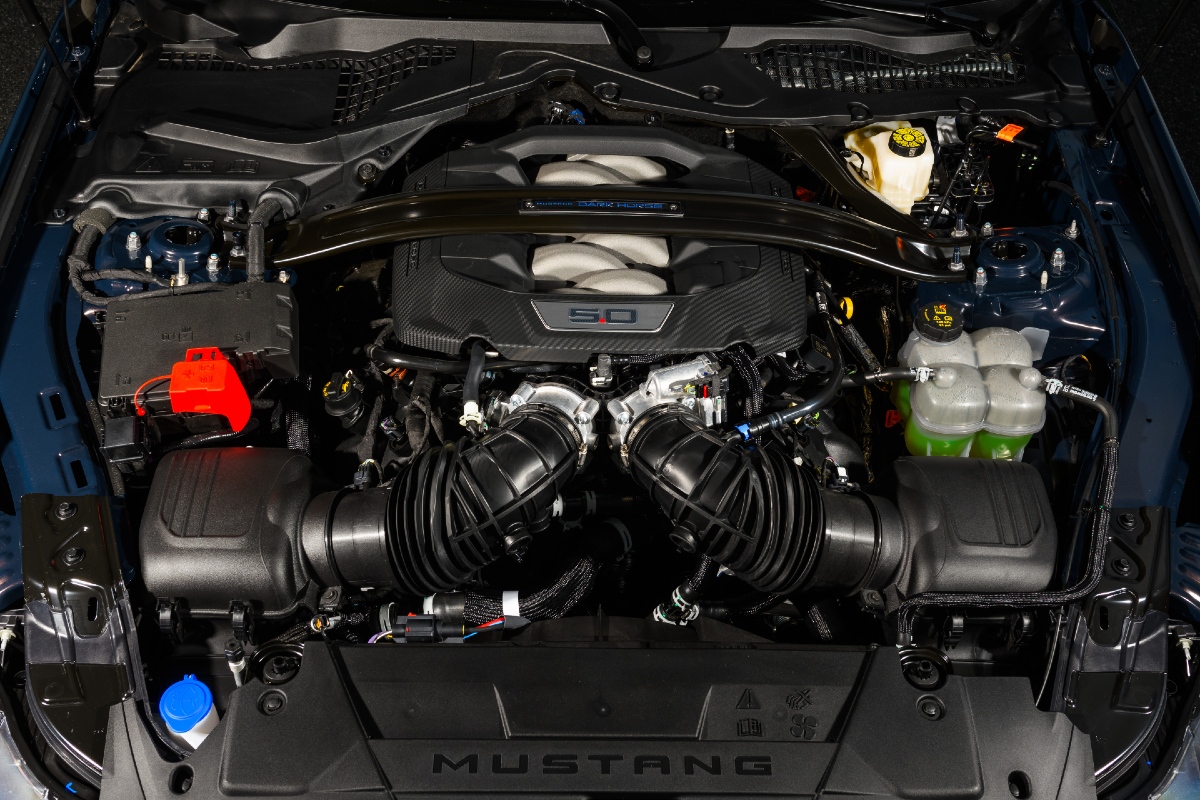
The V8 lineage is especially important for the Ford Mustang, which has offered a V8 engine in every one of its seven generations.

Last year, Automotive News reported the next-generation Mustang would go electric, however Ford has said it’ll continue to make the pony car with V8 engines.
The new-generation Mustang is set to only be petrol-powered, and is likely to launch around 2029, about seven years after the current ‘S650’ pony car broke cover.
While it’s not yet clear what environment it’ll launch in over in the US - where the Donald Trump Administration has repealed financial penalties for carmakers who exceed emissions limits - the next Mustang is likely to be made compliant with tighter regulations in other markets.

By 2029, Australia’s New Vehicle Efficiency Standard (NVES) would have reached its most stringent level announced so far, with passenger cars like the Mustang will have to produce no more than 58g of CO2 per kilometre (g/km) to avoid Ford paying a $100 penalty for every car sold.
At present, the Australian-delivered Mustang GT (5.0-litre V8) manual emits 310g/km, and both the GT automatic coupe and automatic emit 293g/km - significantly more than not only the 2029 limit, but also the 2026 limit of 117g/km.
In the case of the latter, the Ford Mustang has already copped a price rise of $5000 across the board, announced in July last year and due in part to the NVES, which was followed by another $1000 increase for MY26 examples.
Though there have been claims of a hybrid Mustang on the horizon, it is yet to come to fruition.


